
How Bucket Width Changes Excavator Productivity and Hydraulic Demand
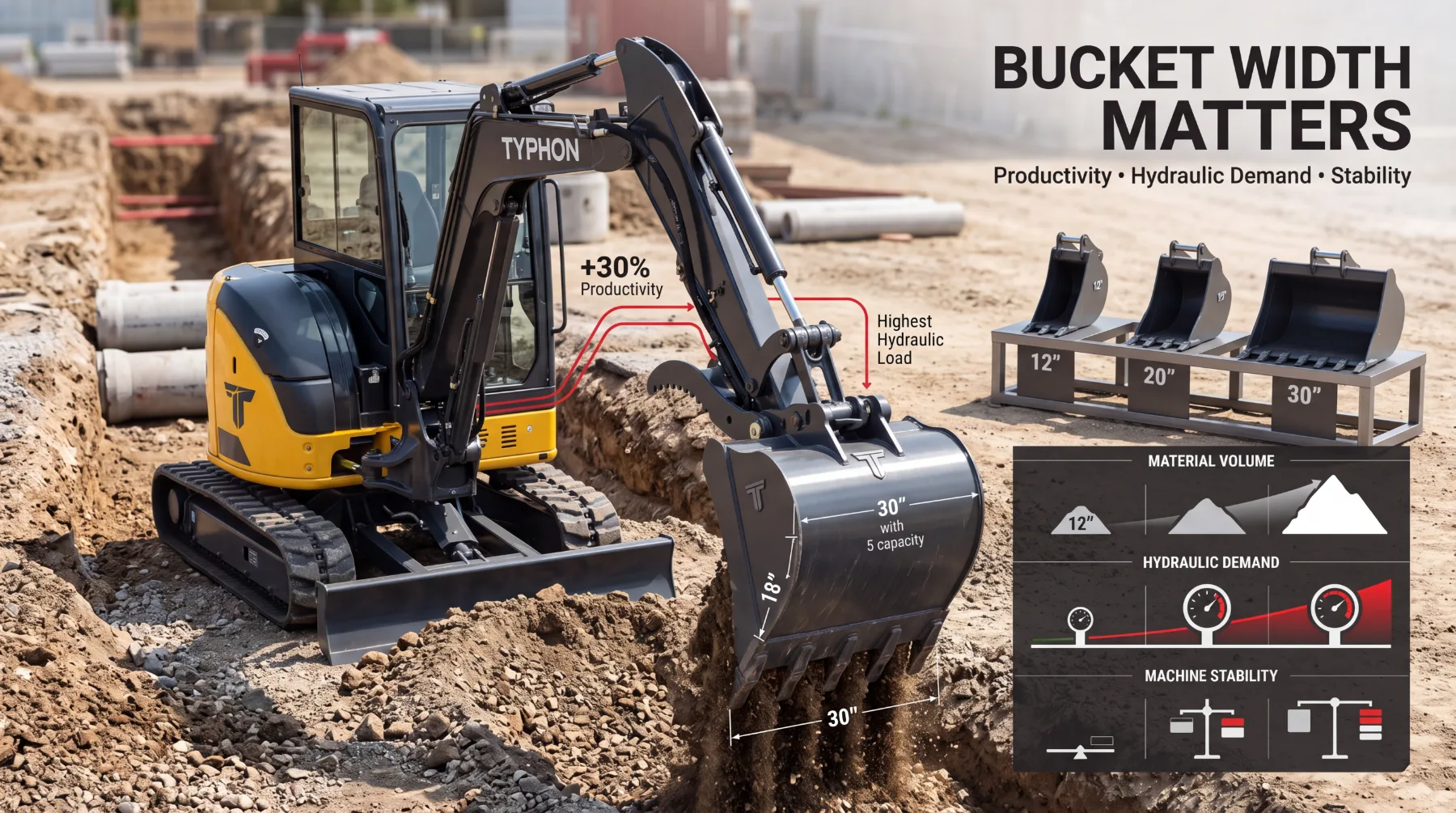
The bucket is where an excavator meets the ground, and its width has more influence on performance than many operators realize. Choose a bucket that fits the machine and the material, and you move earth efficiently, cycle after cycle. Choose one that is too wide or poorly matched, and you strain the hydraulics, slow your progress, and put unnecessary wear on the machine. Bucket width shapes how much material you move, how hard the hydraulic system has to work, and how stable the excavator stays under load. Understanding these connections helps you select the right bucket and get dependable, cost-effective results from your equipment. This guide explains how bucket width affects productivity and hydraulic demand, how to match a bucket to your material, and how to choose the right width for confident, efficient digging.
How Bucket Width Affects Excavator Productivity
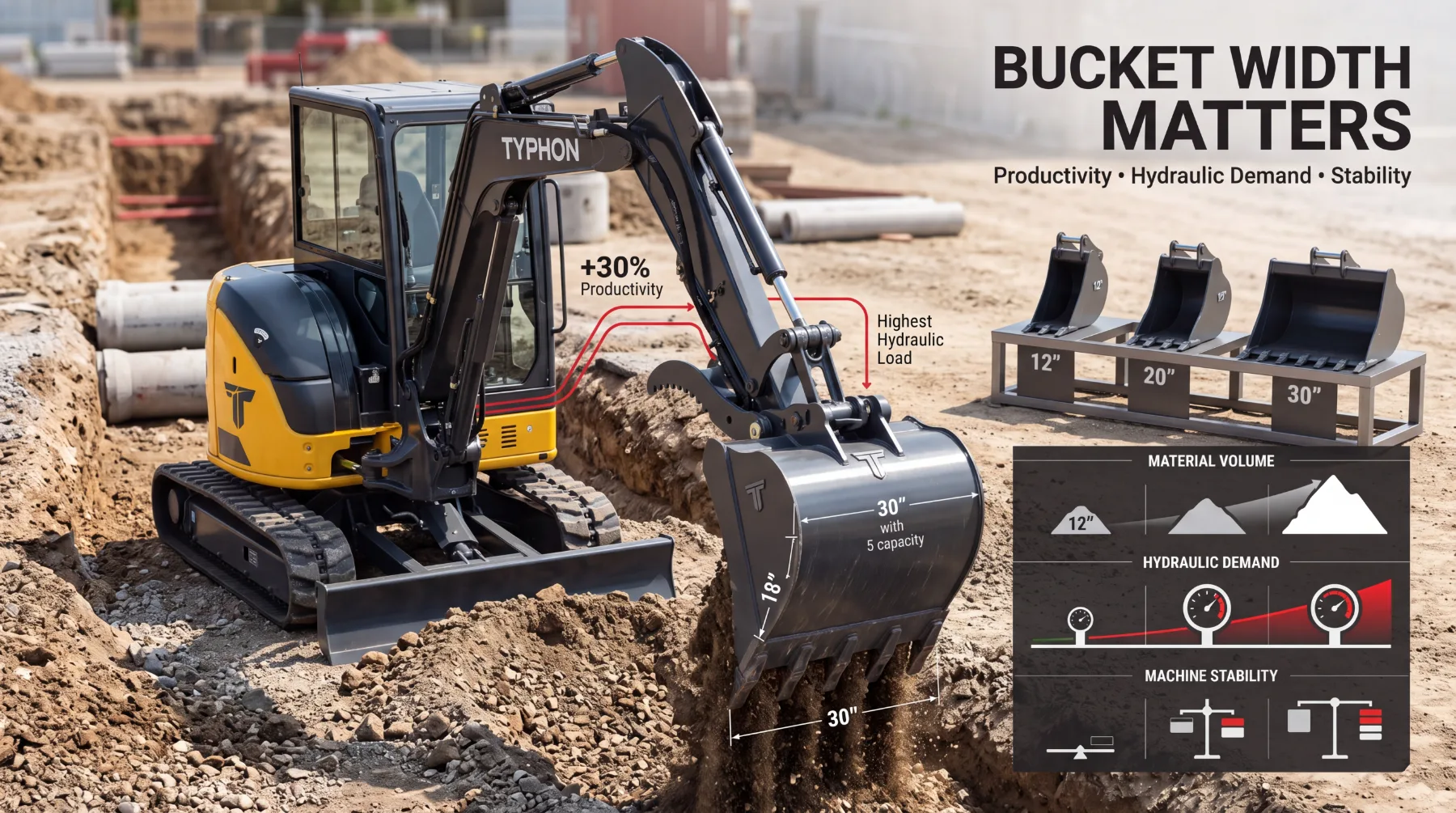
Bucket width has a direct and obvious link to productivity: a wider bucket holds more material, so it can move more with every digging cycle. When you are handling loose, easily excavated soil, that extra capacity translates into fewer passes to move the same volume, and fewer passes mean more work completed in less time. For general excavation in favorable material, a wider bucket can genuinely lift your output, letting the machine shift larger quantities of earth over the course of a shift. This is the appeal of a wide bucket, and in the right conditions it is a real advantage worth pursuing.
The picture is more nuanced than capacity alone, however. Productivity is not decided by bucket width in isolation, because several other factors shape how much a machine actually accomplishes. Consider the elements that work alongside bucket width:
- Digging depth, which determines how much material is available to fill the bucket on each pass and how the machine reaches its target.
- Cycle time, the speed at which the machine digs, swings, dumps, and returns, since faster cycles multiply the effect of each bucketful.
- Material conditions, because loose soil fills a wide bucket easily while dense, compacted, or heavy material resists it.
- Machine capability, meaning the excavator’s power, hydraulics, and weight, which set the limits on what any bucket can effectively achieve.
These factors interact, and this is why a wider bucket does not automatically deliver more productivity. In loose material with a capable machine, a wide bucket fills fully and quickly, and output rises. In heavy or compacted ground, that same wide bucket may struggle to fill completely, slow the cycle, and tax the machine, which erodes the gains its capacity promised. Real productivity comes from matching bucket width to the material and the machine so each cycle is both full and efficient. When those elements align, a wider bucket rewards you with genuine output; when they do not, capacity on its own achieves little.
Wider Buckets and Hydraulic Demand
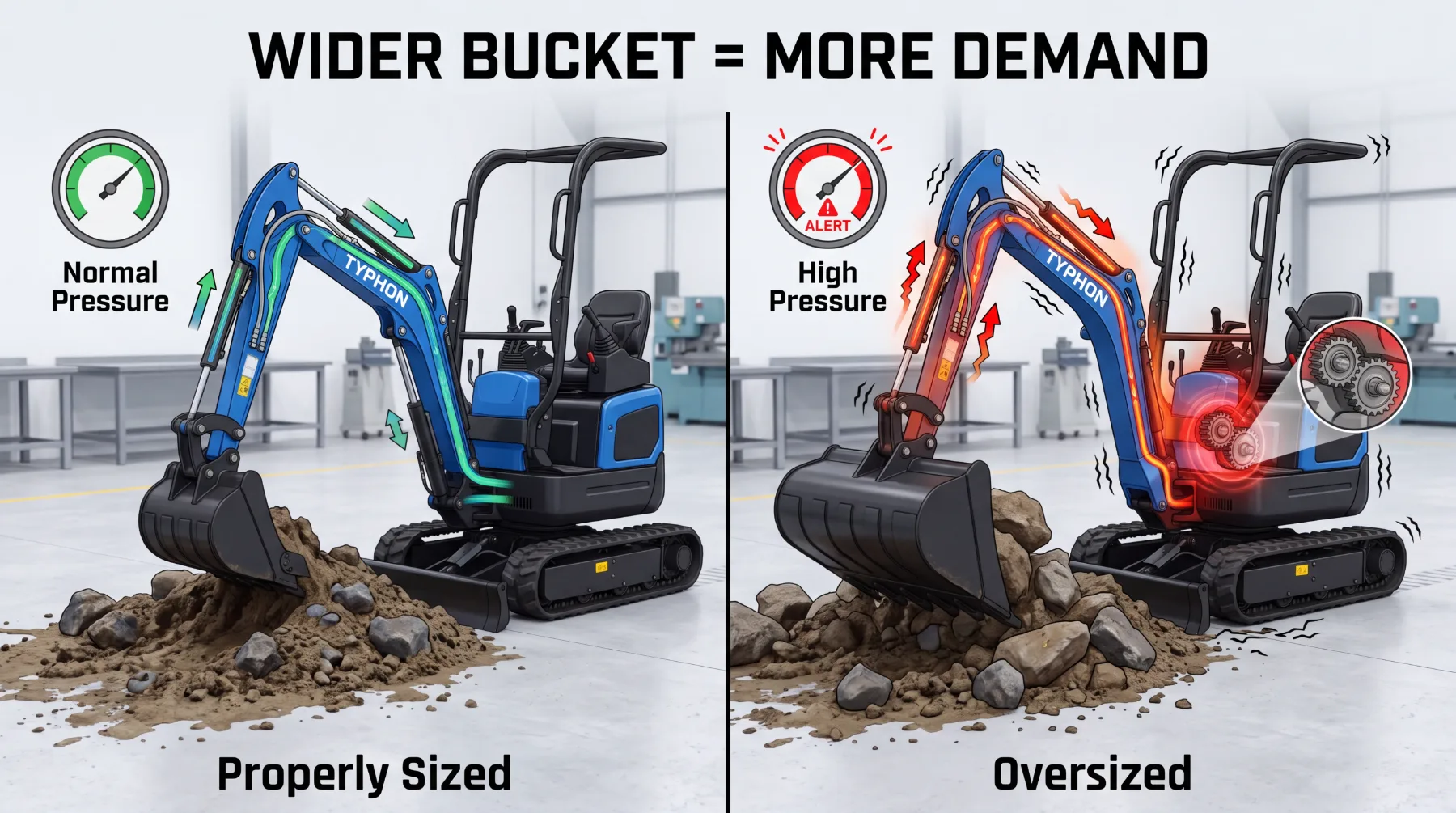
Every advantage of a wider bucket carries a corresponding cost in hydraulic demand, and understanding this trade-off is essential to using one well. A larger bucket generally requires more hydraulic force at every stage of the digging cycle. It takes more force to penetrate the ground with a wider cutting edge, more force to fill the larger cavity with material, more force to lift the heavier loaded bucket, and more sustained hydraulic power to operate it smoothly under load. The excavator’s hydraulic system supplies all of this, so a wider bucket asks more of the pump, valves, and cylinders throughout the work.
When the bucket is properly sized for the machine, the hydraulic system meets these demands comfortably and the excavator performs as it should. The trouble begins when the bucket is too large for the excavator’s hydraulic capacity. In that situation, the system is asked to deliver more force than it can supply efficiently, and performance suffers as a result. An oversized bucket can cause the machine to strain, slowing the digging cycle as the hydraulics labor to penetrate, fill, and lift. Rather than boosting productivity, an oversized bucket can actually reduce it, because the machine cannot power it at full pace.
The consequences reach beyond speed. When hydraulics are pushed beyond their comfortable range, overall efficiency drops, the system works harder and generates more heat, and the added stress can accelerate wear on hydraulic components over time. A bucket that looks productive on paper, thanks to its capacity, can quietly cost you in slow cycles, wasted energy, and shortened component life if the machine cannot support it. This is why hydraulic demand must be weighed against bucket width from the start. The goal is a bucket the excavator can power fully and smoothly through every part of the cycle, so its capacity becomes a genuine benefit rather than a burden the hydraulic system cannot bear.
Matching Bucket Width to Material
Bucket width should always be matched to the type of material you are handling and the kind of excavation work you are doing, because the right width for one task can be entirely wrong for another. A bucket is a tool, and like any tool, its effectiveness depends on suiting it to the job. Getting this match right is one of the most practical ways to improve both productivity and efficiency, since a well-matched bucket fills properly, works with the machine rather than against it, and delivers the result the task calls for.
Narrower buckets and wider buckets each have their place. A narrow bucket concentrates the machine’s digging force onto a smaller cutting width, which helps it penetrate and excavate in focused, defined work. A wide bucket spreads that force across a larger area but moves more material per pass, which suits broader, higher-volume work in more forgiving conditions. Consider how the two align with common tasks:
- Narrower buckets are often well suited to trenching, where the goal is a defined, relatively narrow excavation and concentrated digging force helps cut cleanly into the ground.
- Wider buckets tend to be more effective for general excavation, grading, and material cleanup, where moving larger volumes and covering more ground efficiently matters more than a narrow, precise cut.
The material itself reinforces these choices. In firm or resistant ground, a narrower bucket lets the machine focus its force where it is needed, digging more effectively than a wide bucket that would spread the same force too thin. In loose, easily worked material, a wider bucket fills readily and moves volume efficiently, making the most of favorable conditions. Matching width to both the material and the task ensures the bucket fills well, the machine works within its comfortable range, and the job gets done efficiently. Choosing a bucket without regard to the material is a common misstep, and taking the time to match the two is a straightforward path to better, more dependable performance.
Bucket Size and Machine Stability
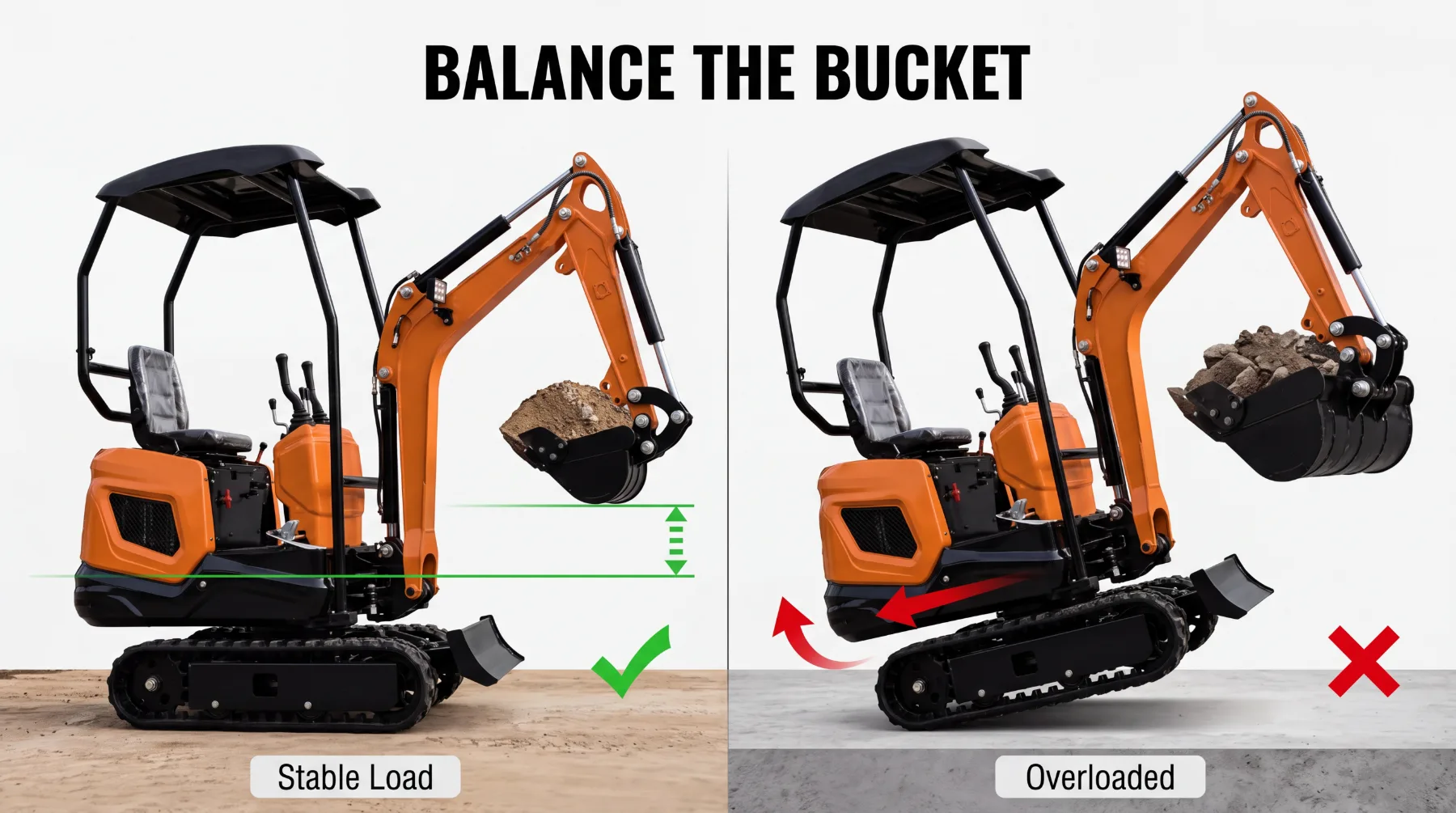
Bucket width and weight affect more than digging and hydraulics; they also influence how stable the excavator remains during work. A wider or heavier bucket adds load to the machine, particularly when it is filled with material and extended out on the arm. That added weight at the front of the excavator shifts the machine’s balance and increases the demand placed on it, which can affect both stability and lifting performance. A bucket that is well within the machine’s capacity keeps the excavator steady and controlled, while one that is too large or heavy can unsettle it, especially when lifting a full load at reach.
This is why bucket size must be considered against the specific capabilities of the excavator rather than chosen on capacity alone. Several of the machine’s characteristics determine how much bucket it can safely and effectively handle, and these deserve careful attention when selecting a bucket.
The excavator’s operating weight is central, because the machine’s own mass anchors it and counterbalances the load carried at the front. A heavier machine can support a larger bucket more securely than a lighter one. Hydraulic capacity matters too, since the system must supply the force to lift and control the loaded bucket without straining, as covered earlier. Finally, the rated lifting capability sets a clear limit on how much weight the machine can lift safely at a given reach, and a bucket that pushes the excavator beyond that rating compromises both safety and performance.
When these factors are considered together, the bucket becomes an extension of a balanced machine rather than a load that overwhelms it. An excavator working within its operating weight, hydraulic capacity, and rated lifting capability stays stable, lifts confidently, and handles material with control. Choosing a bucket that respects these limits protects the machine, the operator, and the quality of the work, ensuring the excavator performs dependably throughout the digging and lifting cycle rather than being pushed past what it was built to handle.
Choosing the Right Bucket Width
Selecting the right bucket width brings together everything covered so far, because the ideal choice balances several considerations at once rather than optimizing for any single one. The best bucket width strikes a balance between material capacity, digging requirements, hydraulic demand, and machine size. Get that balance right, and you maximize productivity without putting unnecessary strain on the excavator. Lean too far toward capacity, and you risk overloading the hydraulics and unsettling the machine; lean too far toward caution, and you leave productivity on the table. The goal is the width that fits your work and your machine together.
A sound decision starts with understanding your typical work and weighing the key factors as a whole. Consider these together when selecting a bucket:
- Material capacity, meaning how much you want to move per cycle, balanced against whether the machine can fill and power that capacity in your conditions.
- Digging requirements, including whether your work is focused trenching or broad excavation, grading, and cleanup, which points toward a narrower or wider bucket.
- Hydraulic demand, ensuring the excavator can penetrate, fill, and lift the bucket smoothly without straining the hydraulic system.
- Machine size, including operating weight and rated lifting capability, which set the safe limits on how large a bucket the excavator can handle.
These factors are interconnected, so the right bucket is the one where they align. A machine handling loose soil in open excavation with ample hydraulic capacity can make excellent use of a wider bucket, while one trenching in firm ground is better served by a narrower one that concentrates its force. The material, the task, and the machine together define the sensible range of widths, and the best choice sits comfortably within that range.
The dependable approach is to define your primary work and material first, then choose the widest bucket your excavator can fill, power, and lift comfortably in those conditions. That width gives you strong productivity while keeping the hydraulics and the machine well within their capabilities. Matching the bucket to the work this way protects your equipment, controls your operating costs, and delivers the efficient, reliable performance that productive excavation depends on.
Conclusion
Bucket width is a decision that ripples through an excavator’s entire performance. A wider bucket can move more material per cycle and lift productivity in loose, favorable soil, but that potential is only realized when digging depth, cycle time, material conditions, and machine capability all align. Wider buckets demand more hydraulic force to penetrate, fill, lift, and operate, and a bucket too large for the machine reduces both performance and efficiency while accelerating wear. Matching width to material and task matters just as much, with narrower buckets suiting trenching and wider buckets serving general excavation, grading, and cleanup. Bucket size also affects stability, so the excavator’s operating weight, hydraulic capacity, and rated lifting capability must guide the choice. Bringing these threads together, the right bucket width balances material capacity, digging requirements, hydraulic demand, and machine size. Define your work and material first, then choose the widest bucket your machine can fill, power, and lift comfortably. Match the bucket to the machine and the job, and your excavator will reward you with efficient, dependable, cost-effective performance.
Frequently Asked Questions
1. Does a wider bucket always make an excavator more productive?
Not always. A wider bucket holds more material, so it can move more per digging cycle, and in loose, easily excavated soil that often translates into higher productivity because fewer passes are needed. However, productivity depends on more than bucket capacity alone. Digging depth determines how much material is available to fill the bucket each pass, cycle time governs how quickly the machine completes each dig-swing-dump-return sequence, and material conditions decide whether a wide bucket fills easily or struggles. Machine capability sets the ultimate limits, since the excavator’s power, hydraulics, and weight determine what any bucket can achieve. In loose material with a capable machine, a wide bucket fills fully and boosts output. In heavy or compacted ground, that same bucket may fail to fill completely, slow the cycle, and strain the machine, which erodes the productivity its capacity promised. Real gains come from matching bucket width to both the material and the machine.
2. How does bucket width affect hydraulic demand?
A wider bucket generally requires more hydraulic force at every stage of the digging cycle. It takes more force to penetrate the ground with a wider cutting edge, more force to fill the larger cavity, more force to lift the heavier loaded bucket, and more sustained hydraulic power to operate it smoothly under load. The excavator’s hydraulic system, meaning its pump, valves, and cylinders, must supply all of this. When the bucket is properly sized for the machine, the system meets these demands comfortably and the excavator performs well. When the bucket is too large for the machine’s hydraulic capacity, the system is asked to deliver more force than it can supply efficiently. This causes the machine to strain and slows the digging cycle, and it can actually reduce productivity rather than improve it. It also lowers overall efficiency, generates more heat, and can accelerate wear on hydraulic components over time.
3. When should I use a narrow bucket instead of a wide one?
The choice depends on your material and the type of work. Narrower buckets are often well suited to trenching, where the goal is a defined, relatively narrow excavation. A narrow bucket concentrates the machine’s digging force onto a smaller cutting width, which helps it penetrate and cut cleanly into the ground, especially in firm or resistant material where focused force is an advantage. Wider buckets tend to be more effective for general excavation, grading, and material cleanup, where moving larger volumes and covering more ground efficiently matters more than a narrow, precise cut. In loose, easily worked material, a wide bucket fills readily and moves volume efficiently. The guiding principle is to match the bucket to both the material and the task. Use a narrow bucket when you need concentrated force or a defined cut, and a wide bucket when you need to move larger volumes in more forgiving conditions.
4. How does bucket size affect excavator stability?
A wider or heavier bucket adds load to the excavator, particularly when it is filled with material and extended out on the arm. That added weight at the front shifts the machine’s balance and increases the demands placed on it, which can affect both stability and lifting performance. A bucket well within the machine’s capacity keeps the excavator steady and controlled, while one that is too large or heavy can unsettle it, especially when lifting a full load at reach. This is why bucket size should be considered against the machine’s specific capabilities. The operating weight anchors the excavator and counterbalances the load, so a heavier machine can support a larger bucket more securely. Hydraulic capacity must supply the force to lift and control the loaded bucket without straining. The rated lifting capability sets a clear limit on how much the machine can safely lift at a given reach, and a bucket that exceeds it compromises both safety and performance.
5. How do I choose the right bucket width for my excavator?
Choose a width that balances material capacity, digging requirements, hydraulic demand, and machine size, because the ideal bucket is where these factors align rather than one that maximizes any single quality. Start by defining your primary work and material. Consider how much you want to move per cycle, but weigh that against whether the machine can fill and power that capacity in your conditions. Think about whether your work is focused trenching, which points toward a narrower bucket, or broad excavation, grading, and cleanup, which favors a wider one. Make sure the excavator can penetrate, fill, and lift the bucket smoothly without straining the hydraulics, and confirm the bucket stays within the machine’s operating weight and rated lifting capability. The dependable approach is to choose the widest bucket your excavator can fill, power, and lift comfortably in your typical conditions. That gives you strong productivity while keeping the hydraulics and the machine well within their limits.